
Pi System: Pioticon's Integrated Performance System
Pi System is Pioticon's proprietary performance intelligence system, designed to integrate governance, planning, cost, risk and performance intelligence into a single, cohesive control environment. By consolidating disparate data sets into a unified source of truth, Pi System enables foresight-driven project control: operational noise is reduced, emerging risks are identified early, and schedule, cost and performance variances are converted into actionable intelligence.
Pi System integrates systems, workflows and analytics to eliminate ambiguity in decision-making. Control is achieved through the deliberate alignment of digital intelligence and human judgement, enabling teams to operate with clarity, confidence and discipline in uncertain environments.
Performance enablement models
Three ways Pi System is deployed
Pioticon deploys Pi System through flexible enablement models that align with client maturity, project complexity and delivery objectives.
- Pi CaaS
Performance Integrated Control as a Service
Pi CaaS embeds Pi System into live project environments as an operating control platform. Governance, project controls, performance intelligence and reporting are delivered through a single, integrated environment, enabling shared accountability and real-time visibility across the project lifecycle. It shifts organisations from reactive execution to foresight-led performance control.
PMC Services → - Pi DiS
Productive Intelligent Digital Solutions
Pi DiS is Pioticon's digital intelligence capability, where project platforms are configured to deliver understanding, not just connectivity. Through multi-criteria optimisation and contextual analytics, fragmented information is transformed into meaningful insight, so decisions are driven by verified data rather than assumption.
Digital Solutions → - Pi Coach
People Influence & Capability Enablement
Pi Coach strengthens workforce capability by aligning people, roles and behaviours with delivery systems. Powered by Pi System, it replaces assumption with understanding through continuous feedback, applied coaching and capability reinforcement, sustaining performance improvement through ownership, decisiveness and leadership maturity.
Coaching & Development (Pi Academy) →
How it works
One loop from client input to continuous improvement
Client input feeds the four control disciplines, which run on the Plan, Do, Check, Act cycle at the centre of the system; performance is measured, turned into intelligence, governed and decided, and the lesson feeds the next cycle. Two enablers surround the loop: coaching and development (knowing, to expert) and digital and technology solutions (doing, to value-added outcome).
Client requirements and project input
The brief, the contract, the constraints and the project's own data are the starting point; nothing in the system is generic.
The four control disciplines
Scope, strategy and change; planning and scheduling; cost management; and risk and contingency management are set up on shared structures so they can be read together from the first baseline.
The Plan, Do, Check, Act cycle
At the centre of the system: every discipline plans, executes, checks and adjusts on the same cadence, so control is continuous rather than a periodic report.
Scope, schedule, cost and risk performance
Delivery is measured against the baseline in each discipline, using agreed progress rules rather than opinion.
Performance intelligence and communication
Variances and trends are converted into decision-grade intelligence and communicated to the people who can act on them.
Project management and control governance
Decision rights, stage gates, assurance reviews and the reporting rhythm turn intelligence into timely decisions.
Decision
Recovery, re-baselining, contingency drawdown or change is decided on evidence, in the right forum, at the right time.
Continuous performance improvement
Lessons feed back into structures, processes and the next planning cycle, so the same problem is not solved twice.
Integrated control capabilities
Eight elements, one system
Pioticon delivers integrated control across the eight core elements of Project Management & Control, supported by Pi System. They operate as a unified system, ensuring alignment between strategy, execution and assurance.
Implementation approach
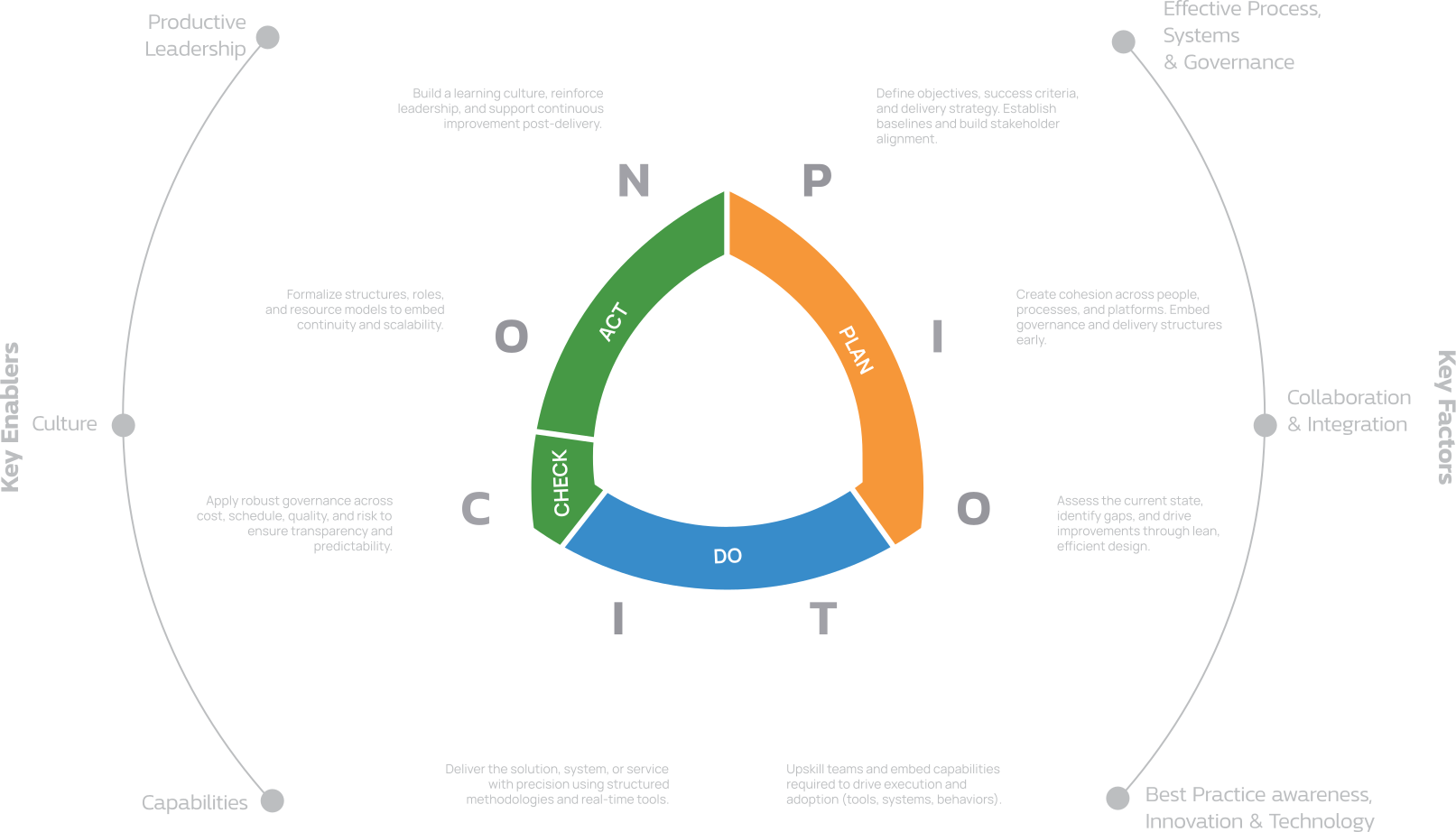
An action-oriented, PDCA-aligned delivery model
The Pioticon approach is grounded in the Plan–Do–Check–Act cycle, so the same model delivers PMC services, digital implementation and capability development with disciplined execution and continuous improvement. Traditional delivery is reactive, with delayed response and limited visibility; Pioticon's model is proactive, with predictive insight and predictive control.
- Plan | Integrate | Optimise
Plan
Establish strategic objectives, align stakeholders, and integrate systems, processes and governance frameworks to create a strong foundation for effective delivery.
- Train | Implement
Do
Enable teams through capability development and execute solutions using structured methodologies, digital tools and real-time delivery practices.
- Control
Check
Monitor performance across cost, schedule, quality and risk through robust control frameworks, providing transparency and early insight into emerging issues.
- Organise | Nurture
Act
Embed improvements, formalise operating structures and foster a culture of learning and continuous improvement to sustain long-term performance.
The Pioticon principle
From ambiguity to objectivity
Complex project environments often suffer from fragmented control, siloed information and delayed decisions. Pioticon addresses this through a system-oriented methodology that connects governance, data and delivery into a single performance framework. Transparency, accountability and decision clarity are embedded into every stage of delivery, enabling risks to be managed before escalation and outcomes to remain predictable.
Pioticon is designed and led by engineers and Project Management & Control professionals who deliver major infrastructure projects. What differentiates it is the ability to integrate control frameworks, digital intelligence and human judgement; convert complexity into measurable performance outcomes; build long-term capability rather than short-term dependency; operate with technical depth, discipline and transparency; and engineer performance rather than merely manage projects.
Terms used on this page are defined in the project controls glossary.
FAQs
Frequently asked questions
Straight answers to the questions clients ask before they engage us. If yours is not here, ask and we will answer it directly.
Ask a question
What is the Pi System?
Pi System is Pioticon's proprietary performance intelligence system. It integrates governance, planning, cost, risk and performance reporting into one control environment built on a single source of truth, so project control is foresight-driven: risks are seen early and schedule, cost and performance variances become actionable intelligence.
What are Pi CaaS, Pi DiS and Pi Coach?
The three enablement models through which Pi System is deployed. Pi CaaS (Performance Integrated Control as a Service) embeds it in a live project as the operating control platform; Pi DiS (Productive Intelligent Digital Solutions) configures project platforms to deliver understanding from data; Pi Coach (People Influence & Capability Enablement) builds the workforce capability to run it.
Is Pi System a software product?
It is a system, not a single product: an integrated control framework, the methodology to run it and the configured tools that feed it. Pioticon's own software, PiViz for performance intelligence visualisation and Mass Haul Viz for earthworks, and platforms such as Primavera P6, Oracle Primavera Cloud, Unifier, Safran Risk and TILOS are configured to it.
What is Pi System v2.0?
The version of Pi System that Pi Academy's ten coaching programs are aligned to, so every course produces a deliverable the project actually uses.
How does Pi System relate to PMC?
PMC (Project Management and Control) is what Pioticon delivers; Pi System is the performance intelligence system that supports it. The eight PMC capabilities, governance, integrated project controls, scope and change, planning and scheduling, cost, risk and contingency, performance intelligence and forensic delay analysis, run as one loop on Pi System's shared structures and data.