
Scope & Change Management for
Major Infrastructure Projects
Scope and change management for major infrastructure projects and construction protects the baseline: clear scope definition, a delivery strategy that matches the contract, and change control that assesses every variation for time and cost before it is approved. Pioticon embeds this discipline in owner and contractor teams across Australia and New Zealand.
Key Features
Scope & Change Control Coverage

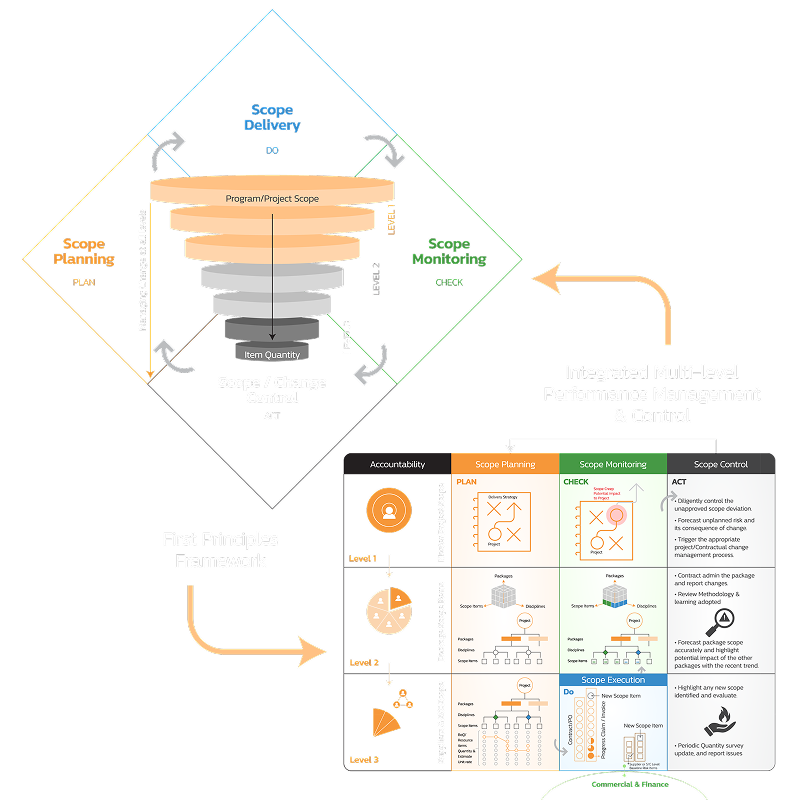
Scope Definition & Maturity Framework
Structured scope definition aligned with the project phase and lifecycle, ensuring requirements, assumptions, and interfaces are clearly understood before commitments are finalised.

WBS & Requirements Architecture
A robust scope breakdown structure that supports planning, cost control, risk management, and governance, creating a common language across disciplines.

Integrated Change Management System
End-to-end change process covering capture, impact assessment, approval, implementation, and benefits tracking, embedded directly into governance workflows.

Impact & Funding Alignment
Integrated assessment of schedule, cost, risk, constructability, approvals, and resourcing, ensuring that change decisions are tied to commercial reality and contingency strategy.


Advantages
Value Delivered Through Disciplined Scope Management

Faster, More Confident Decisions
Reduced delays and decision bottlenecks through clear ownership and timely information.

Stronger Delivery Alignment
Fewer conflicts and less rework by aligning stakeholders around shared definitions of success.

Early Warning, Proactive Control
Leading indicators highlight emerging risks before they impact cost, schedule, or outcomes.

Governance Without Bureaucracy
A scalable system that supports mega-project complexity without slowing execution.
Our Clients
Clients Across Infrastructure & Major Programs












Testimonials
Client Narratives Validate Our Structural Governance Model.


Madan provided programme and scheduling management to the Puhoi To Warkworth Motorway PPP design and construct delivery team. Working with members of both the NZ and Spanish Joint Venture partners, he coordinated the planning and reporting activities across multiple complex interfaces, providing real time data in formats and presentations that was invaluable to the JV and client as well as the teams out in the field.
His communication style and clarity of engagement was recognised and appreciated from the construction supervisors through to JV Board Executives.
Robert Jones
Project Director, Fletcher / Acciona

We had the pleasure of collaborating with Madan from PIOTICON, who played a key role in improving our project management processes. In under three months, he helped transition our planning and scheduling from Excel to a more structured, systematic approach for managing and reporting across our project portfolio. His expertise also allowed us to implement strong reporting intelligence, greatly improving visibility at all levels—from executives to project managers—enabling more effective monitoring of project performance.
Senthil Jayaprakash
Program Manager, Project Services
FAQs
Frequently asked questions
Straight answers to the questions clients ask before they engage us. If yours is not here, ask and we will answer it directly.
Ask a question
What does scope and change management cover on a major project?
Scope definition matched to the project phase, a work breakdown structure that supports planning, cost control, risk and governance, and an end-to-end change process that captures, assesses, approves, implements and tracks every variation before it moves the baseline.
How is a proposed change assessed?
Every change is assessed for schedule, cost, risk, constructability, approvals and resourcing impact, then tied to funding and contingency strategy, so the decision reflects commercial reality as well as the engineering.
Why does scope maturity matter before commitments are made?
Requirements, assumptions and interfaces that are unclear at commitment become variations later. A scope maturity framework aligned to lifecycle gates makes them explicit while they are still cheap to resolve.
Does the change process sit inside project governance?
Yes. It is embedded directly in governance workflows, so impact assessments, approvals and benefits tracking use the same decision forums and the same data as the rest of the controls system.
Reach Us